
Key Takeaways
- Service animals and emotional support animals are legally protected, so no-pet policies, fees, or breed restrictions generally don’t apply.
- Landlords can verify a tenant’s need for an assistance animal but cannot ask for detailed medical information or impose excessive documentation requirements.
- While upfront fees aren’t allowed, landlords can charge for actual damage and enforce rules around behaviour, safety, and disturbances.
- Setting expectations early and keeping records of issues helps prevent disputes and ensures compliance with housing laws.
In North Carolina’s rental market, policies around pets are typically straightforward, until a request for a service or assistance animal enters the conversation.
At that point, standard rules no longer apply in the same way, and how you respond carries both legal and operational consequences.
For landlords and investors, understanding how to navigate these situations is about protecting your property, maintaining fairness across tenants, and managing requests with clarity and confidence.
In this article, Louise Beck Properties will go over how to accommodate and prepare for tenants with service animals.
Why Service Animals Change the Equation
When a tenant qualifies for an assistance animal, federal housing laws require landlords to make reasonable accommodations, even if the property has a strict no-pet policy. This distinction is often misunderstood.
Service and assistance animals exist in a separate legal category, meaning typical pet fees, deposits, and restrictions do not apply.
Understanding the Two Main Categories
To manage these requests properly, it’s important to distinguish between the types of assistance animals you may encounter.
Service Animals
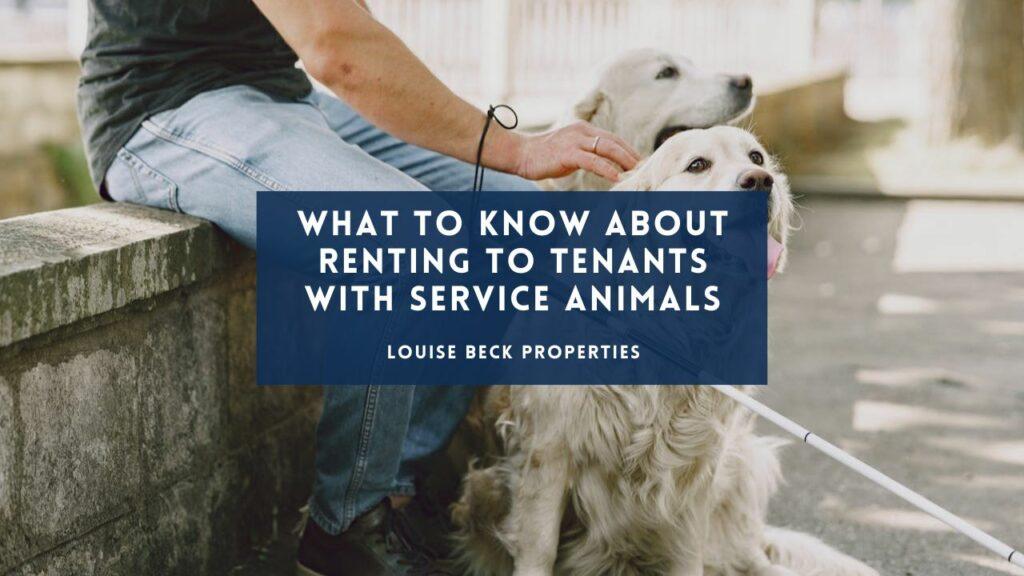
These are typically dogs trained to perform specific tasks related to a disability, guiding individuals with vision impairments, alerting to medical conditions, or assisting with mobility. They are recognized under federal law for their functional role.
Emotional Support Animals (ESAs)
These animals are not trained for specific tasks but provide psychological or emotional benefit. While they don’t fall under the same public-access rules as service animals, they are still protected in housing under federal law.

For landlords both categories may require accommodation in a rental setting, even if your standard lease prohibits animals.
What You Can and Cannot Ask
One of the most sensitive aspects of these situations is documentation.
Landlords are allowed to verify that the tenant has a qualifying need and the animal provides assistance related to that need.
However, there are clear limits. You cannot:
- Ask for detailed medical records.
- Request disclosure of the tenant’s specific diagnosis.
- Require specialized certification beyond reasonable verification.
Overstepping can lead to fair housing violations, while under-verifying can expose you to misuse of the policy. A practical approach is to focus on necessity, not personal details.
Fees, Deposits, and Policy Exceptions
Because assistance animals are not considered pets, standard pet-related charges do not apply. That means no pet rent, no pet deposits, and no breed or weight restrictions. For many landlords, this feels like a loss of control. But it’s important to reframe the situation.
While you cannot charge upfront for the presence of the animal, you are still entitled to recover costs for actual damage caused during the tenancy. This distinction protects both the tenant’s rights and your property.
Managing Risk Without Violating Rights
Allowing an assistance animal does not mean accepting unlimited risk. You retain the right to enforce reasonable standards, including:
- Ensuring the animal does not pose a safety threat.
- Addressing excessive noise or disturbances.
- Requiring compliance with local vaccination laws.
If an animal becomes disruptive or causes ongoing issues, landlords can take action, starting with documented warnings and escalating if necessary. Enforcement should focus on behavior, not the existence of the animal itself.

In practice, documenting incidents consistently is just as important as addressing them. Keeping written records of complaints, warnings, and resolutions creates a clear timeline that protects you if disputes arise.
This approach reinforces that any action taken is based on documented behavior, not the tenant’s protected status, strengthening both compliance and operational control.
Property Protection in Practical Terms
For North Carolina landlords, especially those managing single-family homes or small multifamily units, concerns about wear and tear are valid.
A few proactive steps can help mitigate risk:
- Conduct thorough move-in inspections with documentation.
- Schedule periodic property checks where permitted.
- Maintain clear communication channels for maintenance reporting.
These practices protect your asset without targeting tenants who require assistance animals.
Navigating Gray Areas with Confidence
Not every request is straightforward. Some situations require careful evaluation, particularly when documentation is unclear or when the request appears inconsistent.
Rather than making assumptions, focus on process:
- Review each request individually.
- Request appropriate verification within legal limits.
- Document all communications.
In more complex cases, consulting a property management professional or legal advisor can prevent costly missteps.
Communication as Your First Line of Defense
Many disputes around assistance animals don’t stem from the law itself, they arise from poor communication. Setting expectations early makes a significant difference.

At move-in or lease signing, clarify maintenance responsibilities, property care expectations, and noise and disturbance policies.
The Long-Term Perspective for Investors
From an investment standpoint, accommodating tenants with assistance animals is part of operating in a regulated housing environment.
Handled correctly, these situations:
- Reduce legal exposure.
- Improve tenant relationships.
- Strengthen your reputation as a fair housing provider.
In a state like North Carolina, where rental demand continues to grow across both urban and suburban markets, professionalism in handling these requests becomes a competitive advantage.
Final Takeaway
Renting to tenants with service or assistance animals requires a shift in mindset. It’s less about enforcing blanket policies and more about applying structured, informed judgment.
When you understand the legal framework, set clear expectations, and manage communication effectively, these situations go smoothly.
Navigating service animal requests can be complex, especially when laws, tenant expectations, and property concerns intersect. A professional property management team can help you handle these situations with clarity, consistency, and full compliance.
Partner with experts who understand the details, manage the communication, and keep your rental operating smoothly, no matter what situations arise. Contact Louise Beck Properties today to get started.